‘we are our stories’:
interview with sandra and donna (part 1)
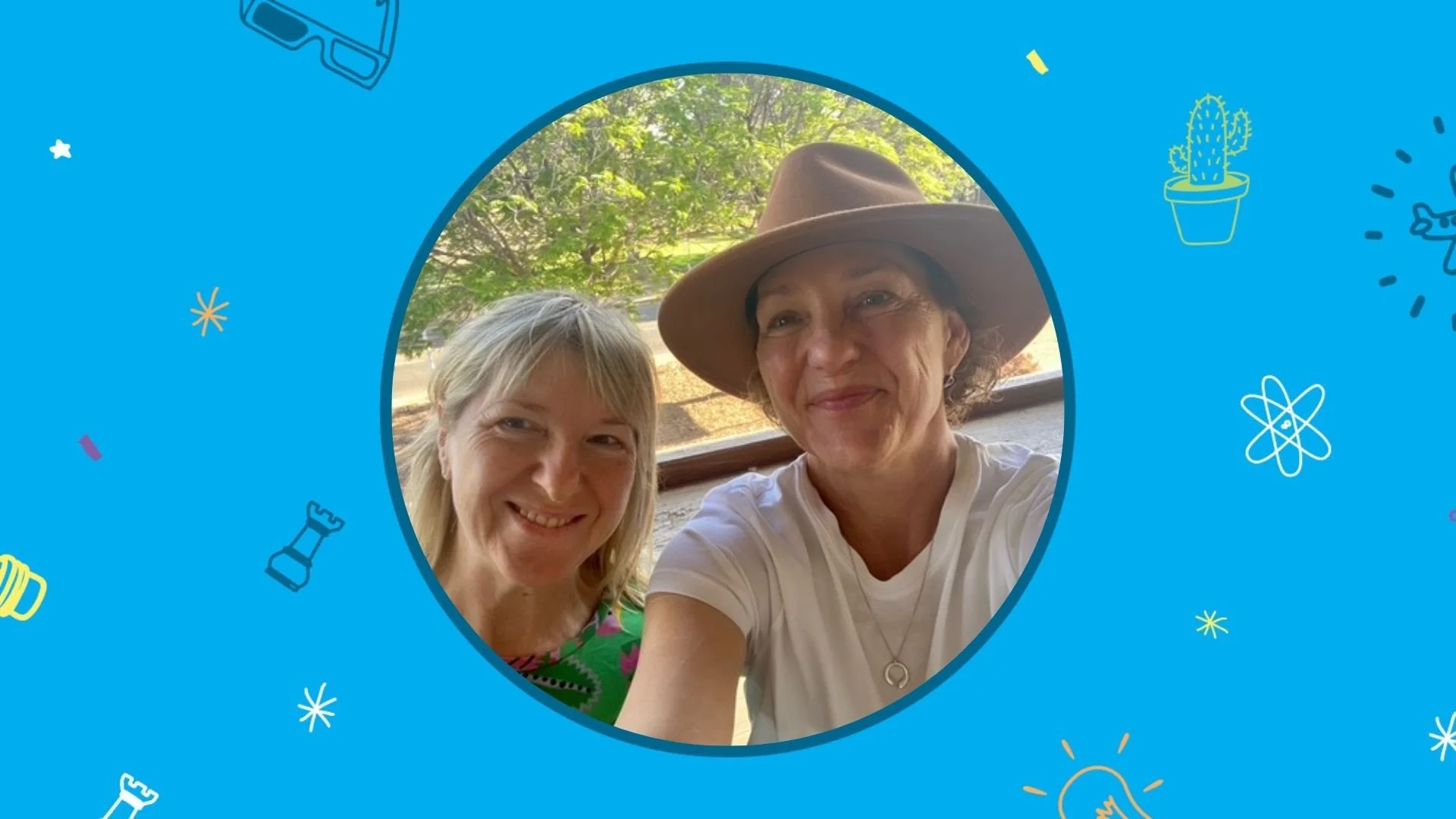
In our September newsletter, we shared the exciting news that QUT academics Sandra Gattenhof and Donna Hancox will be working with Story Island throughout 2026. They'll be collecting data and helping us develop flexible evaluation frameworks, so we can better measure the impact of our work with young people and their communities, and effectively share our success stories. This is a huge milestone in the evolution of Story Island, one we’ve spent years planning.
As Sandra and Donna will be working with us so closely for the next year, we thought it would be great for our community to get to know them. In this two-part interview, Sandra and Donna share a little of their own story with us.
So why are two Queensland academics interested in evaluating Story Island – a small creative arts program in Tasmania? Sandra and Donna told us that it’s their passion to work with regional, remote and under-represented communities.
‘As part of a large-scale three-year project we worked with communities on the North West Coast of Tasmania and fell in love with the landscape, the people, the creativity and the resilience and focus on community we saw across the state’, they said.
‘Story Island is an organisation we have been talking with for a couple of years and waiting for the right time for collaboration to appear. SIP is everything we admire about the community arts and cultural sector, it is dynamic, inclusive, community focused and incredibly impactful.’
While it’s often a challenge for small arts organisations to have the time and skill set to evaluate their programs, Sandra and Donna believe that effective evaluation and impact assessment ‘are crucial for arts organisations to tell the story of their work and its impacts on individuals and whole communities’.
‘For many organisations the only data they are able to gather is numbers of participants and levels of engagement in activities’, they said.
‘While this is useful, it does not capture the voices of the participants or their hopes and ambitions. It also does not capture the hard work and creativity of the organisation.
‘So, evaluations and impact assessments that are able to capture these other aspects are incredibly important for organisations to advocate for funding and for funding bodies to identify where the most impactful work might be occurring.’
Given the nature of their research, it’s no surprise that Sandra and Donna place a high value on stories and storytelling.
‘We are our stories,’ they said.
‘[Stories] are how we connect to each other, bridge differences, build empathy, share information, entertain or heal and they are data. Stories can tell us more about people and places than statistics a lot of the time.’
When we asked Sandra and Donna what they were looking forward to the most about working with Story Island, their response was incredibly heartwarming:
When we visited [Story Island] in September we were struck by the passion and commitment of the artists, facilitators and educators who are part of the Story Island family. Everyone we met demonstrated commitment to enhancing positive outcomes through the power of story for children, young people and the communities they live in. This is a small arts organisation kicking big goals. We can’t wait to help Story Island understand and communicate their impact.
Click here for part 2 of our interview with Sandra and Donna.
Quisque iaculis facilisis lacinia. Mauris euismod pellentesque tellus sit amet mollis.